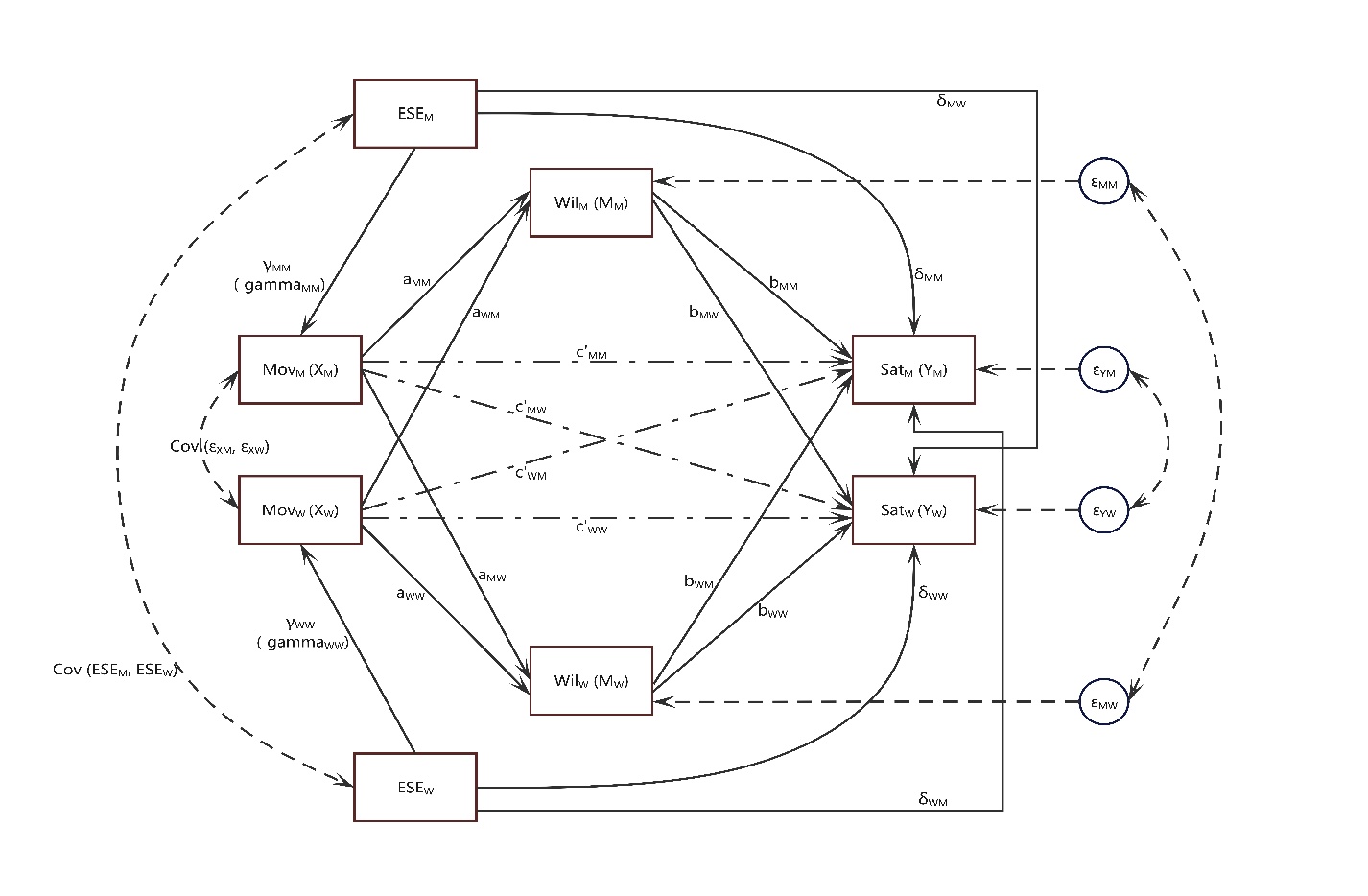
Relationship satisfaction influences mental health and quality of life; however, maintaining such satisfaction can be challenging. Among numerous factors, the initial motive for entering a relationship - an underexplored driver of partner-interaction patterns - may shape later satisfaction. In this study, we will investigate the relations between (1) an individual’s autonomous motivation (Self-Determination Theory) for entering a relationship and their partner’s relationship satisfaction, and (2) that motivation and the individual’s own satisfaction, with willingness to satisfy the partner’s needs as a mediator and both partners’ self-esteem controlled, implementing an actor-partner interdependence mediation model (APIMeM) in lavaan, within Chinese collectivist culture. With a sample of N = 300 dyads, we hypothesize that more autonomous entry motives may lead to greater willingness to meet a partner’s needs for both partners, which in turn improves relationship satisfaction for both partners. The anticipated results underscore the significance of autonomous motives in initiating romantic partnerships and suggest practical implications for premarital counselling and relationship-quality improvement.