


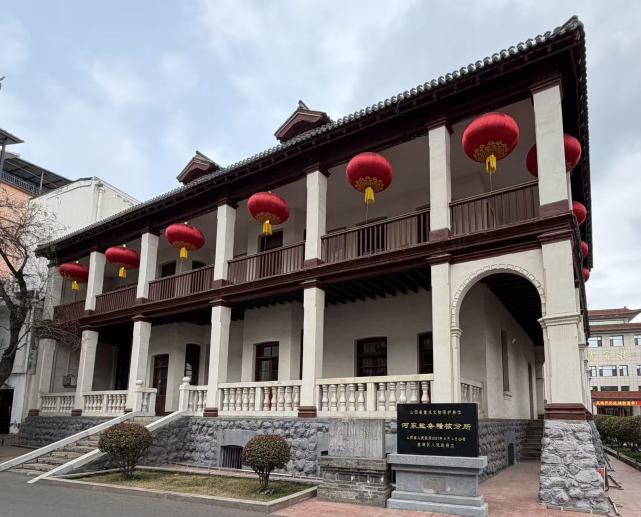
Drawing on field investigation, historical documents, and spatial analysis, the paper explores how reforms in the salt administration and educational systems reshaped local architectural forms during China's period of social and institutional transformation. The study identifies two distinct modes of spatial transformation. As a newly established administrative institution, the Hedong Salt Administration Audit Sub-bureau adopted a purpose-built architectural model characterized by Western-style spatial organization and functional zoning, reflecting the administrative and residential needs of foreign personnel involved in salt management. In contrast, Hedong Middle School evolved through the gradual expansion and adaptation of the traditional Hedong Academy. Although the original courtyard layout was largely retained, the introduction of classrooms, laboratories, dormitories, and sports facilities transformed the former academy into a modern educational campus. The comparison of these two cases demonstrates that architectural space was not merely a passive physical container, but an active medium through which institutional change became spatially visible.