Articles in this Volume

Research Article Open Access
Reconstructing Myth and Identity: A Study of Ne Zha: The Demonic Children Roar
The animated feature Ne Zha achieved record-breaking commercial success in China and initiated dialogues about its cultural determinants. This paper investigates the film's success based on three dimensions of its content. First, the film reimagines Ne Zha from a character with a tragic past into a hero of individual rebellion, making his self-determined character relatable to contemporary youth. Second, the paper deconstructs the family narrative. It challenges patriarchal paradigms and emphasizes emotional dialogue, reflecting the evolution of Chinese family ethics. Finally, the film uses a unique cultural aesthetic that synthesizes the classical East with contemporary digital technology to demonstrate cultural confidence. The paper concludes that the film's success was a merger of cultural innovation, industrial capacity, and compelling emotional content. The film serves as a powerful model for creatively transforming traditional IP and marks a direction for developing Chinese narratives beyond China.
Show more
Read Article PDF
Cite
Research Article Open Access
From Captivity to Selfhood: Trauma and Female Subjectivity in Wide Sargasso Sea and Breasts and Eggs
This paper examines how intimacy, often idealized as trust and reciprocity, can become a site of psychological imprisonment through coercive control in cross-cultural literary narratives. By comparing Jean Rhys’ Wide Sargasso Sea and Kawakami Mieko’s Breasts and Eggs, the study highlights how intimate relationships generate “chronic violence” that reshapes female subjectivity across colonial and contemporary Japanese contexts. Combining trauma theory with the sociological framework of "coercive control", research shows that intimate oppression not only has cross-cultural universality but also presents unique forms in specific historical and social contexts. While Rhys depicts the destructive resistance expressed under colonial patriarchy, Kawakami demonstrates the possibility of women engaging in strategic subjectivity negotiations through silence, writing, and reproductive choices. This study not only expands the research scope of trauma literature from event-based violence to implicit and persistent psychological domination but also reveals its cross-cultural resonance and intergenerational transmission.
Show more
Read Article PDF
Cite
Research Article Open Access
Exploring the Feasibility of Applying the Yangqin in Chinese Pentatonic Music Therapy: A Case Study of The Lament of Zhaojun
Article thumbnail
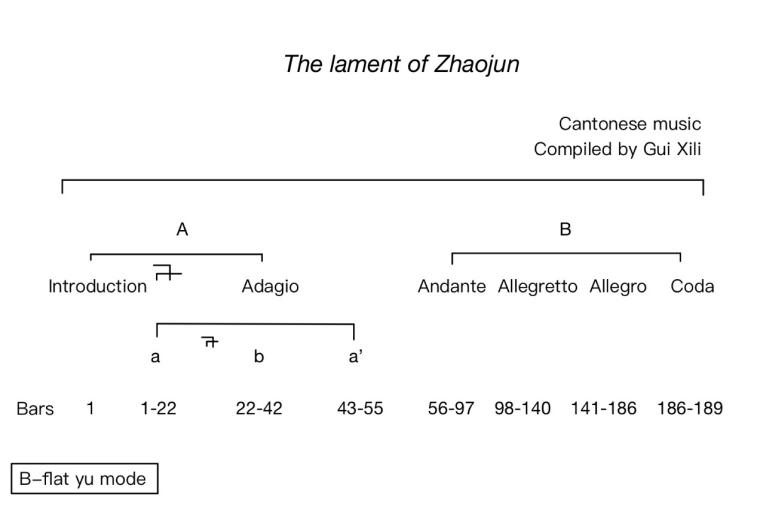
The five-tone therapy in traditional Chinese medicine is a common application in music therapy, but current academic research mainly emphasizes the passive performance of existing pieces, often in forms such as band collaborations or guqin versions. There is a lack of exploration of flexible improvisation, ensemble cooperation, and diverse musical styles, especially study in yangqin solo music in therapy. With the development of music therapy, traditional Chinese pentatonic music has draw increasing attention, and the repertoire used in therapy is mostly performed with traditional instruments. As a traditional Chinese national instrument, the yangqin, renowned for its rich techniques and distinct regional styles, can play different traditional pentatonic sounds, which are indispensable in music therapy. The Lament of Zhaojun, a representative work of Guangdong music, has had a profound influence. And the yangqin, as an indispensable instrument of Guangdong music, also plays an important role. This paper takes The Lament of Zhaojun as an example to analyze the therapeutic effects of the yangqin version of traditional Chinese music. By using qualitative analysis, musical form analysis and performance analysis, this study seeks to explore the positive mobilization and good therapeutic effects of the yangqin in the five Elements music therapy on human physiological functions.
Show more
Read Article PDF
Cite
Research Article Open Access
Gender Performance, Symbolic Capital, and Power: A Critical Analysis of Parenting Content on Chinese Social Media
This study explores how gendered divisions of labor and power relations are shaping parent–child dynamics within contemporary Chinese nuclear families. Drawing on classic sociological theories of family and gender, we examine the traditional roles of mothers as caregivers and fathers as providers, while also considering the profound changes brought about by China’s rapid modernization and the rise of the digital era. Through a two-part research approach, a qualitative content analysis of family parenting videos on social media and in-depth interviews with female adolescents, we sought to understand how these dynamics are performed and perceived from both a public and a private perspective. The findings show that deeply uneven gendered roles persist, with mothers carrying the vast majority of invisible emotional and educational labor, while fathers’ smaller contributions often gain outsized public recognition and "symbolic capital" on social media. Furthermore, the research reveals that children are not passive observers but active participants in the family triangle, often taking on the role of "referee" to manage parental tensions. By linking classic theories with the realities of modern Chinese families, this study offers unique insights into the changing nature of parenting, power, and intimacy in the digital age.
Show more
Read Article PDF
Cite
Research Article Open Access
Reconstructing the Communication Ecology: A Case-Based Three-Stage Evolutionary Model of AIGC Roles
Article thumbnail
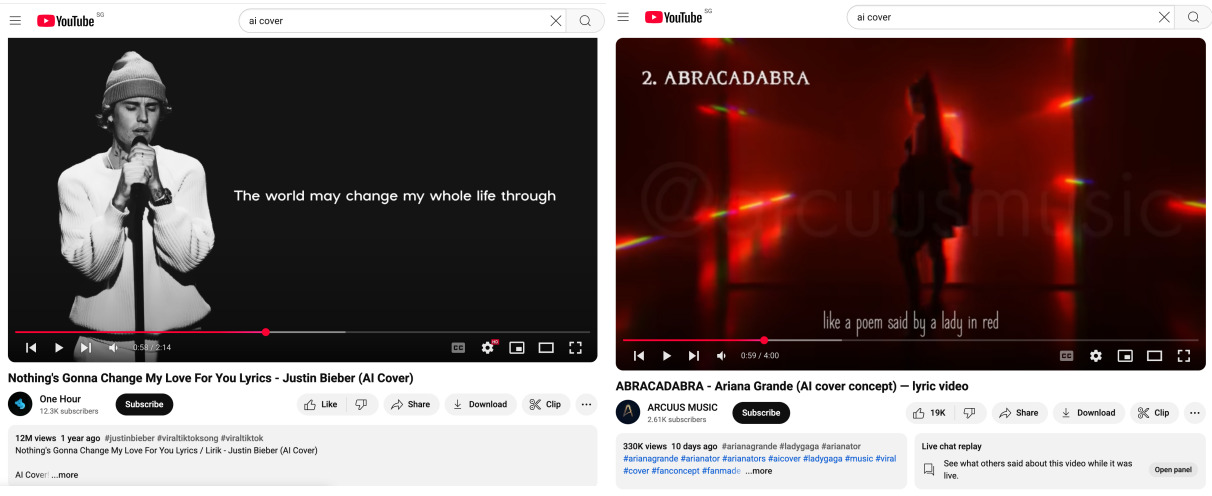
This study investigates how Artificial Intelligence-Generated Content (AIGC) reshapes communication by moving beyond traditional media frameworks. Building on McLuhan’s media theory, participatory culture, and Human-Machine Communication (HMC), the research develops a three-stage evolutionary model that conceptualizes AIGC as “Other,” “Environment,” and “Dialogue Partner.” Through case studies of AI-generated covers on YouTube, AI ASMR videos, and Xiaohongshu’s interactive translation hashtag, the analysis demonstrates how AIGC evolves from a passive content factory to a perceptual regulator and finally to a co-creative partner. This transformation highlights a redistribution of agency between humans and AI, challenges conventional notions of authorship and originality, and extends media from bodily extensions to imaginative and symbolic interaction. The study contributes a new theoretical lens referring to “the medium as actor”, and underscores both the opportunities and ethical challenges of human–machine symbiosis in the age of AIGC.
Show more
Read Article PDF
Cite
Research Article Open Access
Occupational Gender Bias in Large Language Models: Reproduction of Stereotypes, Paradoxical Analysis, and a Path Towards Algorithmic Justice
Article thumbnail
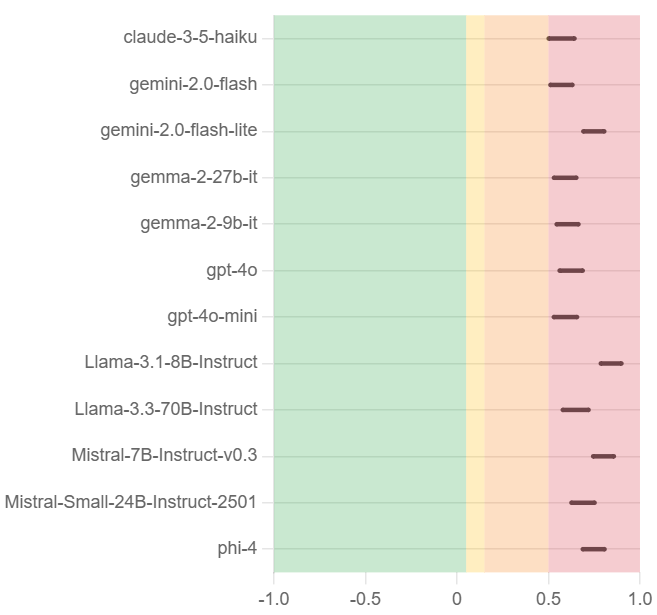
Large language models (LLMs) are now used in many critical social decisions, including hiring. The social biases they carry pose a serious challenge to fairness. This paper aims to examine occupational gender bias in LLMs, specifically the paradoxical coexistence of "oversaturation of female roles" and deep-seated stereotypes. By analyzing the complexity of this bias, it aims to provide theoretical and empirical support for building effective paths to algorithmic justice governance. This research employed literature and data analysis, examining quantitative test results from the GenderBench evaluation suite and integrating recent cutting-edge academic findings on model auditing and bias mechanisms. Large-scale language models replicate and amplify occupational gender stereotypes, while the apparent increase in female roles masks the entrenchment of structural biases. To address such issues, effective governance must go beyond simple technical tuning. This article proposes building a collaborative governance framework that includes standardized audits, mandatory manual reviews, and multi-party participation to achieve true algorithmic justice.
Show more
Read Article PDF
Cite
Research Article Open Access
"Nakanohito Does Not Exist!": Hyperpersonal Interaction and Image Construction in Virtual Streamer Culture
Article thumbnail
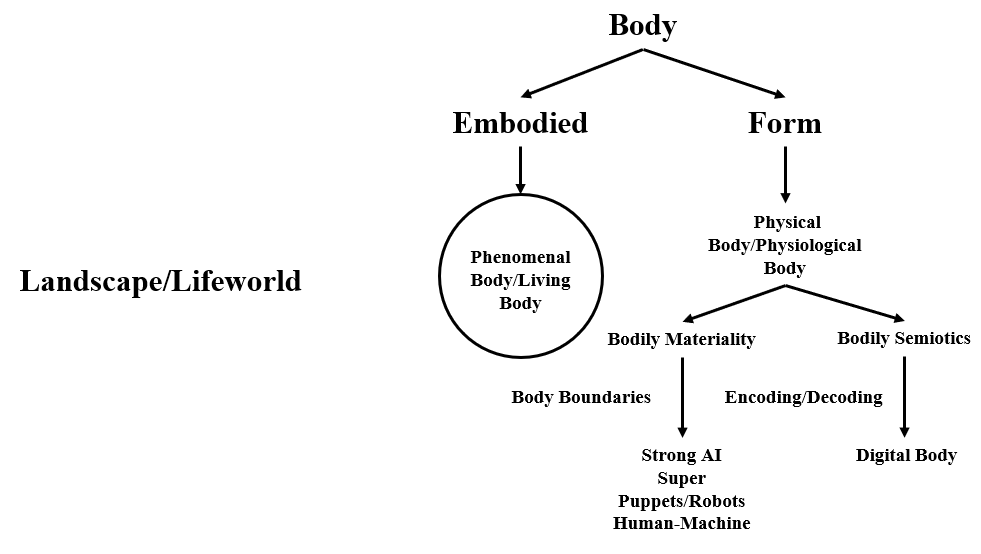
Virtual streamers, as an emerging form of computer-mediated communication, exhibit unique communicative characteristics in their image construction mechanisms. This study applies hyperpersonal interaction theory and employs literature review and case analysis methods to construct a three-level analytical framework for virtual streamer image construction. The research findings reveal three distinct levels: At the first level of real body construction, "nakanohito" (the person inside) achieves selective transmission of bodily information through motion capture and other technologies, forming a "one-to-one" relational model distinct from voice actor logic. At the second level of virtual image construction, principles of body phenomenology are applied to transform real bodies into symbolic digital bodies, transmitting idealized information to audiences through carefully designed visual symbols. At the third level of media persona construction, two appreciation modes emerge: "media persona as real body" and "media persona as virtual image." The research conclusions indicate that virtual streamer image construction is a dynamic process involving multiple participants, where audience feedback plays a crucial role in hyperpersonal interaction, driving continuous optimization and evolution of the image. This study provides a theoretical framework for understanding media persona construction in the digital age and holds significant value for research on communication mechanisms of virtual media forms.
Show more
Read Article PDF
Cite
Research Article Open Access
Integrating Carbon Capture and Storage Across the Building Life Cycle for Material Decarbonization
The construction industry, accounting for nearly 40% of global carbon emissions, faces pressing demands for energy conservation and emission reduction. Concrete, as a major source of carbon emissions, requires a green transition to mitigate its environmental impact. This article focuses on Carbon Capture and Storage (CCS) technology and explores its application potential and strategies for reducing the carbon footprint of building materials across their entire life cycle. By analyzing the technical principles of CCS and its integration within the construction sector, this study demonstrates that CCS can address direct emissions from building operations and be embedded into the material life cycle through carbon utilization—such as carbon curing and mixing during production, and enhancing recycled aggregates at the end of life—thereby establishing a multi-stage carbon cycle. In conclusion, CCS technology is essential for achieving deep decarbonization in the construction sector. However, its large-scale deployment relies on standardization, policy incentives, and cross-sector collaboration.
Show more
Read Article PDF
Cite
Research Article Open Access
Controversy and Mechanism Analysis of the Association Between Social Media Use and Symptoms of Body Dysmorphic Disorder in Adolescents
Adolescence is a sensitive period for identity formation and peer evaluation. Teenagers are exposed to idealised and digitally altered content that perpetuates limited standards of attractiveness due to the growth of image-centric platforms like Instagram, TikTok, and Snapchat.Body Dysmorphic Disorder (BDD), affecting about 2.2% of adolescents, involves a persistent preoccupation with perceived flaws and is linked to depression, anxiety, and social withdrawal. This study examines the available data and makes the case that appearance-focused behaviours, such as obsessive feedback monitoring, filter dependence, and selfie editing, are more responsible for the link between social media and BDD than overall screen time. It highlight a “filter paradox”: beautification tools can provide short-term relief while increasing long-term vulnerability by widening the gap between the “digital self” and the “mirror self.” By combining cognitive-behavioral models, social comparison, and objectification, we suggest a mechanism through which exposure to in dealized imagery promotes self-objectification, upward comparison, and biases attention towards perceived flaws, all of which reinforce safety behaviours and sustain symptoms. By highlighting variations in samples, measurements, and overlooked modifiers, we resolve contradictory results. Platform-level disclosures, algorithmic diversity, and therapeutic approaches aimed at promoting digital safety behaviours are among the ramifications. We list the top goals for studies that focus on mechanisms and test BDD specifically.
Show more
Read Article PDF
Cite
Research Article Open Access
Framework of "Optimization of Coastal Urban Building Layout Based on Tsunami Risk"
Tsunamis pose significant threats to South China’s coastal cities, with the Manila subduction zone as the primary risk source, where 2500-year return period wave heights exceed 3m in high-risk areas. While recent studies advanced risk assessment, analyzed coastal risk, explored Pearl River Estuary terrain effects, and proposed a full-chain framework, they lack integration with building layout optimization. This study develops a layout optimization framework for these cities: it uses Liu’s framework to zone areas into three risk levels (high: >3m wave/2m inundation; medium: 1–3m/0.5–2m; low: <1m/<0.5m) by integrating multi-source data, and links to evacuation research. Results propose targeted strategies: high-risk zones need strict density control and coastal green buffers; medium zones require reduced spacing and wave-resistant materials; low zones prioritize evacuation alignment. The framework bridges risk assessment and planning, providing a scientific basis for coastal resilience, though it relies on existing data.
Show more
Read Article PDF
Cite