
Articles in this Volume

Research Article Open Access
The Operational Mechanisms of K-pop Fan Organizations in the Entertainment Industry
Article thumbnail
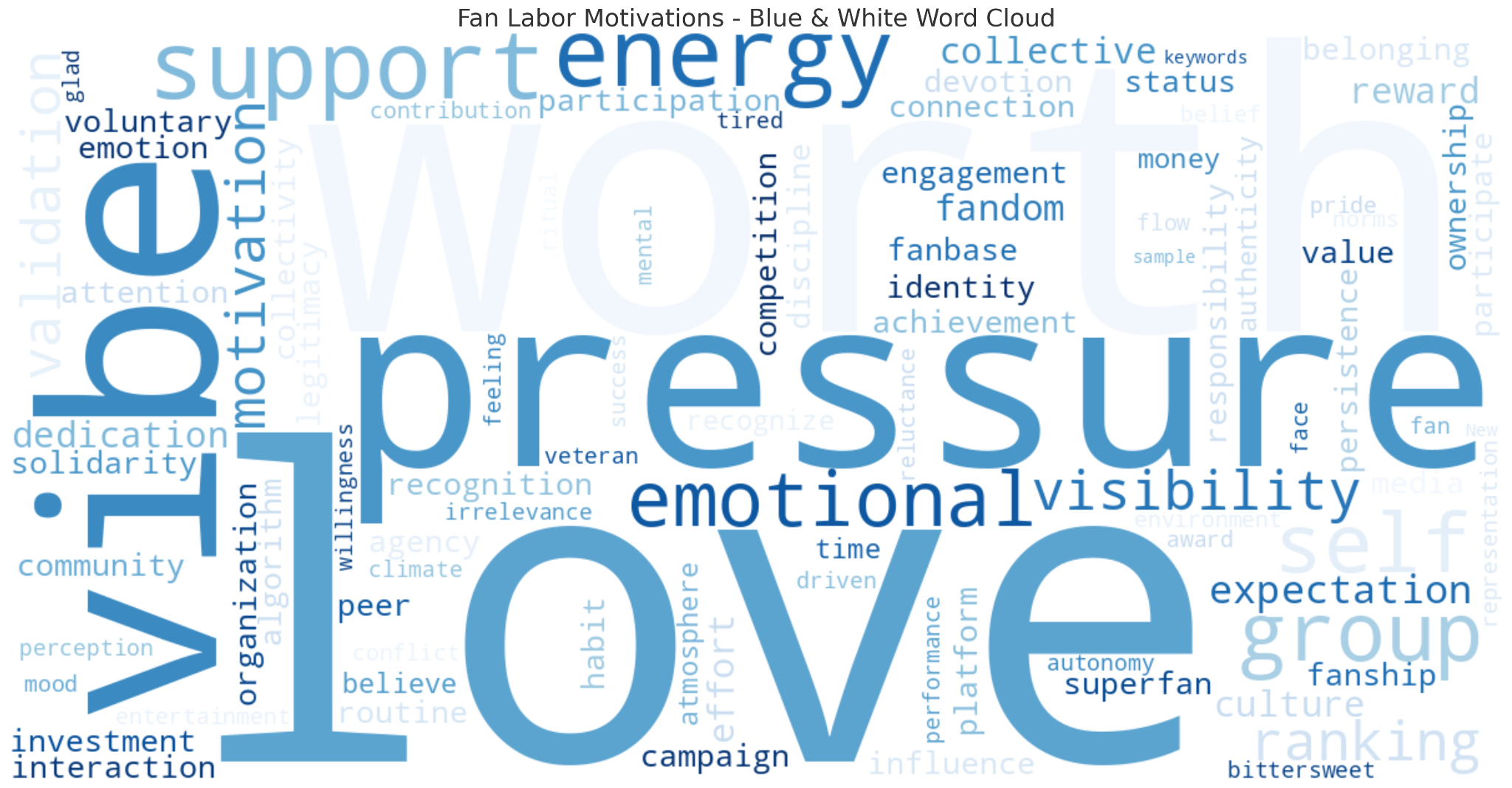
This paper examines how K-pop fan organizations by using BTS’s ARMY as a case study, function as informal labor systems embedded within the entertainment industry. Rather than simply reproducing the familiar narrative of exploitation, this research focuses on the emotional, social, and strategic dimensions of fan work—streaming, data management, bulk purchasing, and reputation defense—that are both unpaid and deeply organized. Based on interviews with fans and existing scholarship, the study argues that fan labor is not purely coerced but often voluntary, driven by love, peer dynamics, and a sense of shared identity with idols. Yet this labor exists within a structural imbalance: companies benefit financially and reputationally while fans are left emotionally invested but materially uncompensated. This paper also highlights fans’ ambivalence toward entertainment companies, revealing moments of both complicity and resistance, such as silent boycotts or protest campaigns. In doing so, the research reframes K-pop fandom not simply as a cultural curiosity or marketing asset, but as a form of digital labor that complicates easy binaries of agency and exploitation. The aim is to situate fan organizations within broader conversations on participatory culture, emotional capitalism, and the platform economy.
Show more
Read Article PDF
Cite
Research Article Open Access
Research on the Communication Strategy of Chinese Traditional Culture on TikTok Platform in the Context of Globalisation
Taking the TikTok platform as an example, this paper explores the international dissemination of Chinese traditional culture in the context of globalisation. The results of the study show that TikTok provides new opportunities for the dissemination of traditional Chinese culture in terms of diversified content forms, precise algorithmic recommendations and user interactivity, enabling cultural elements to quickly enter the international perspective. However, at the same time, this study also finds that there are three main problems in the dissemination process: first, the content form tends to be superficial, and the deep logic and spiritual connotation of traditional culture is easily weakened; second, the algorithmic mechanism leads to "traffic orientation" and "information cocoon", which is not conducive to the sustainability of in-depth cultural content. Secondly, the algorithmic mechanism leads to "traffic orientation" and "information cocoon", which is not conducive to the sustainable dissemination of in-depth cultural content; and the "cultural trust deficit" occurs in cross-cultural contexts, which affects the acceptance of the audience. To address these problems, the study proposes optimisation paths, including: enriching content expression and exploring cultural connotations; incorporating cultural education and value factors into the recommendation mechanism; and enhancing cross-cultural identity through empathetic communication and international cooperation. Ultimately, this paper emphasises that the value of TikTok in cultural communication lies not only in enhancing visibility, but also in promoting cross-civilisation understanding and resonance, providing a new reference for the international communication and soft power construction of Chinese culture.
Show more
Read Article PDF
Cite
Research Article Open Access
Feminism in the May Fourth Movement
Feminism in the May Fourth Movement is one of the important issues in modern Chinese history. By studying the background and overview of the May Fourth Movement, the situation of women's participation, the rise and development of feminism, and its influence and significance on society, this paper deeply discusses the important role of feminism in Chinese culture during the May Fourth Movement. The May Fourth Movement was a revolutionary movement of great influence in China's modern history, bringing about great political, cultural, and social changes. During this period, the participation of women played an active role, as they organized and participated in the movement in different ways, making important contributions to the struggle for equal rights and interests for women.
Show more
Read Article PDF
Cite
Research Article Open Access
The "Grimm" Rebuild of Disney Animation: Cultural Filtration and Global Image Building
With the development of the world economy, cultural soft power has become an integral part of national strength. Through the analysis of the adaptation strategy of the classic characters in Grimm's Fairy Tales by Disney animated films and the cultural impact brought by this process, this study analyzes how American culture filters and integrates other cultures, and then shapes the global image. Based on the research method of critical discourse analysis, this paper elaborates on the adaptation strategy of Disney animation, the production background and marketing strategy of Disney animation, and the global dissemination and cultural impact of American values from three aspects of text analysis, discourse practice and social practice. Disney's "Grimm Rebuild" process has successfully constructed its own brand image and cultural paradigm, formed a unique cultural appeal and influence, and provided a powerful reference for the overseas dissemination of Chinese culture, but we still need to pay attention to respecting the uniqueness and diversity of national cultures and avoid convergence.
Show more
Read Article PDF
Cite
Research Article Open Access
A Study on the Simulacra Construction Mechanism of “Multiple Identities”: A Case of “One-Person-Multiple-Roles” Short Dramas
With the rapid development of short video platforms, narrative micro dramas featuring “one actor playing multiple roles” are emerging and swiftly occupying a dominant position in content traffic. Based on Jean Baudrillard’s theory of “simulacra”, this paper examines representative creators on platforms such as Douyin, Kuaishou, and Xiaohongshu — including figures like Ren Zhida, Zhouzhou Nanjiao, and Li Ruru — to explore the mechanism of simulacra construction in this genre across content, audience, platform and socio-cultural dimensions.It aims to uncover the logic of identity recognition and emotional transmission embodied in this emerging content form. The study reveals that micro dramas featuring “one actor playing multiple roles” align with the logic of simulacra production: the identity construction involved is not a reproduction of real-life identities, but rather a mechanism of identity generation that is highly adapted to platform-driven dissemination logic and the sensory demands of the audience. However, when “identity” becomes a mass-produced, labeled, and algorithm-driven commodity, the boundaries between individual and society, as well as between the real and the virtual, are being redefined.
Show more
Read Article PDF
Cite
Research Article Open Access
The Impact of Social Media on Teenagers' Communication and Imitation: A Study Based on Different Family Backgrounds
The issue of juvenile delinquency has been continuously threatening the legitimate rights and interests of teenagers. There is a huge number of criminal behaviors that are related to the adolescent. With the development of the Internet, juvenile criminal behaviors have been widely spread through social media, which will significantly increase the rate of juvenile delinquency. Moreover, the differentiation among families’ income would also intensify the conflict in society. This study aims to research how the social media could influence a teenager’s crime behavior. Also, the family background would be an intermediate variable in order to determine the relationship between family condition, social media addiction and juvenile delinquency. The result shows that the different ways to limit the students contacting with the Internet and parents’ profession, relation, incomes tend to impact the level of students getting in touch with harmful content. The most effective ways to relieve this problem is to let the government, school, social media, and parents work together to prevent the over-exposure of Internet of the student in multi-dimension.
Show more
Read Article PDF
Cite
Research Article Open Access
Harnessing Digital Resources for Rural Education Transformation: A Media-Centric Pathway Exploration
China is advancing digital education alongside rural revitalization. Rural schools now have more devices and better connectivity, yet classroom outcomes remain uneven. This study adopts a media and communication perspective and conceptualizes rural digitalization as a chain thatconnects content production, channel dissemination, and feedback-driven iterative optimization. Guided by Media Education Theory, Communication Effects Theory, and a reframed Digital Divide that shifts from access to use and content, the analysis examines four issues: the fit of urban-oriented content with local needs and with the levels of teachers and students; infrastructure gaps that limit reach; missing feedback and evaluation loops; and the misalignment between media logic and pedagogical aims. Findings show that the main barriers are a supply–demand mismatch, one-way channels, and broken feedback rather than simple scarcity. The paper proposes demand-led localization with layered development for students and for teachers, and upgrades to connectivity, devices, and maintenance. It also recommends context-based delivery through short videos and live streams, community groups, and offline access points, and a multi-party mechanism that links feedback, evaluation, and incentives. Access does not equal impact. Teacher workload and curriculum structure shape outcomes. The conclusions apply mainly to typical township schools.
Show more
Read Article PDF
Cite
Research Article Open Access
An Analysis of the Mechanism of the Red Note Check-in Behavior Based on Dramaturgy Theory
In today’s era of social media, The Red Note, as a representative lifestyle social platform in China, has cultivated a unique content ecology centered on "authentic sharing" and "seeding communication" since its establishment. Among millions of posts, check-in behavior seems to be significant and prevalent. Hence, this article probes into this phenomenon based on dramaturgical theory, which serves as the core analytical framework. This study concludes that check-in behavior on The Red Note is not a simple act of daily logging, but rather an active performance for impression management. Grounded in Goffman’s dramaturgical theory, users strategically craft an “ideal persona” for the front stage while concealing contradictory information in the back stage. This performance, employing strategies such as “theme selection,” “prop utilization,” and “feedback solicitation,” constructs three archetypal virtual models: goal-oriented, experiential, and community-based, which are deeply intertwined with the platform’s “seeding culture.” Ultimately, this performance-based user interaction, by reinforcing or adjusting their personas, not only strengthens users’ self-identity but also forms the core mechanism for the platform to maintain user stickiness and achieve sustainable growth.
Show more
Read Article PDF
Cite
Research Article Open Access
A Study on the Dissemination of Rural Culture in Documentary Reality Shows—A Case Study of Let’s Farm
As a vital component of Chinese civilization, rural culture is continuously evolving in its contemporary expression and dissemination due to profound changes in the media landscape. Through case analysis and close textual reading, this study examines how the rural documentary variety show Let’s Farm achieves the modern translation and value reinterpretation of rural culture via its program content, visual construction, and cultural implications. The findings reveal that Let’s Farm realistically portrays the entire process of young people returning to the countryside to engage in agricultural work. By integrating elements such as technological agriculture, intergenerational emotions, collaborative spirit, and media interaction, the program effectively dismantles the stereotypical image of farmers as “toiling with faces to the soil and backs to the sky,” thereby reshaping the younger generation’s perception of the countryside and the land. However, the program also faces challenges in content quality and cross-cultural communication effectiveness, while its social value and potential for international dissemination warrant further exploration. Nevertheless, such documentary variety shows present an innovative approach to the mediated dissemination of rural culture in the contemporary context.
Show more
Read Article PDF
Cite
Research Article Open Access
Defining and Operationalising “AI Film” Within a Transmedia Storytelling Framework
Article thumbnail
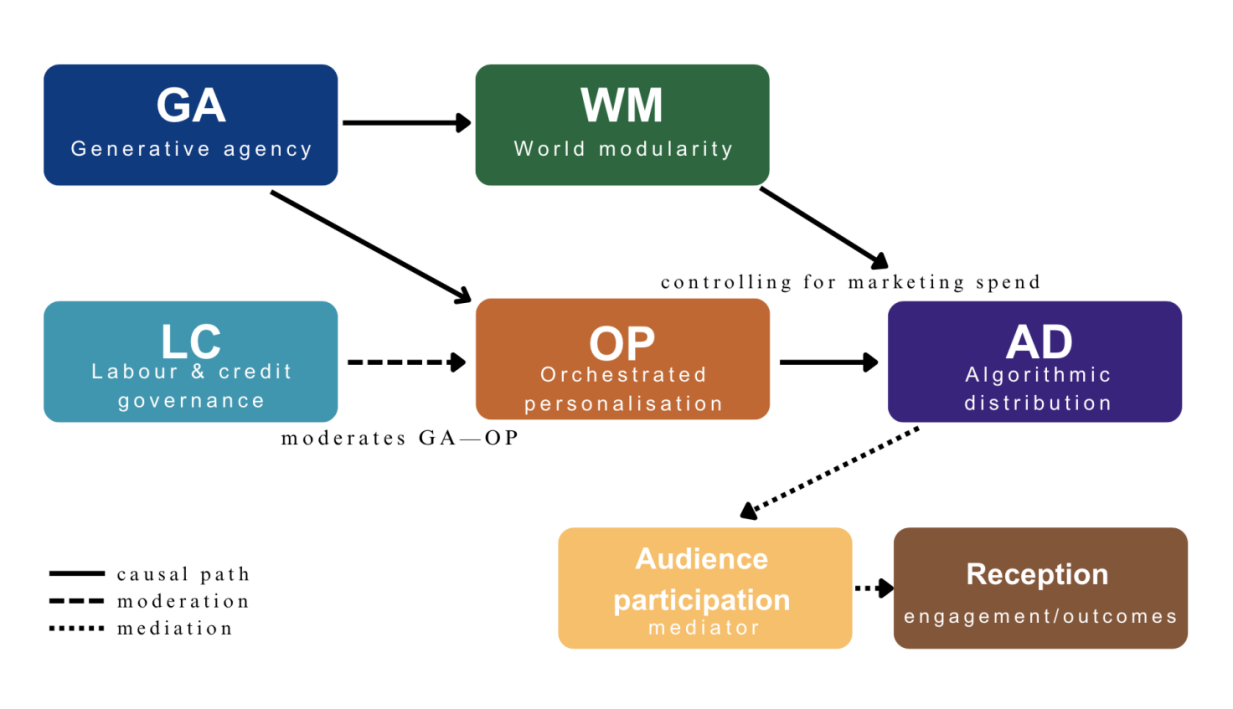
We advance an operational definition of “AI film” that integrates three lenses—computer-science systems and capabilities, communication/media studies on storyworlds and circulation, and industry/labour governance on contracts and credit. We formalize five dimensions—Generative Agency (GA), World Modularity (WM), Orchestrated Personalisation (OP), Algorithmic Distribution (AD), and Labour/Credit governance (LC)—and translate them into auditable coding criteria. Each dimension is specified with decision anchors (e.g., GA from assistive use to automated control; AD within a 7–14 day attention window) and evidence requirements (assets, logs, platform signals). Applying the framework to three contemporary cases (Marvel’s Secret Invasion title sequence, the indie horror Late Night with the Devil publicity stills, and TriStar’s Here with on-set face replacement), we map a gradient from peripheral augmentation to embedded, real-time generativity. We find that OP remains largely latent despite technical feasibility, while AD is frequently catalyzed by controversy or milestone coverage. The framework reduces false positives in classifying “AI film”, clarifies where ethical and legal risks concentrate (disclosure, consent, remuneration), and offers reproducible guidelines for empirical studies. We conclude with implications for credit attribution, contractual language, and cross-platform orchestration in transmedia environments.
Show more
Read Article PDF
Cite