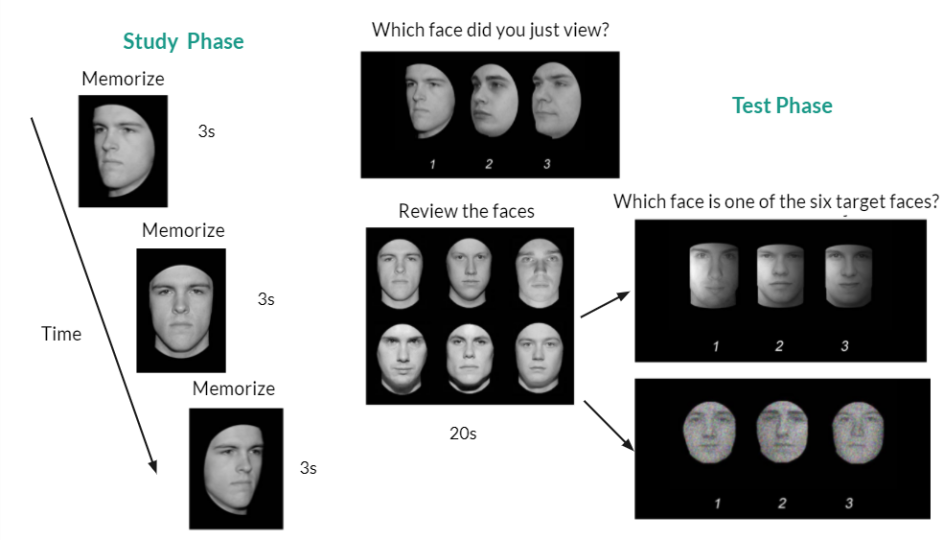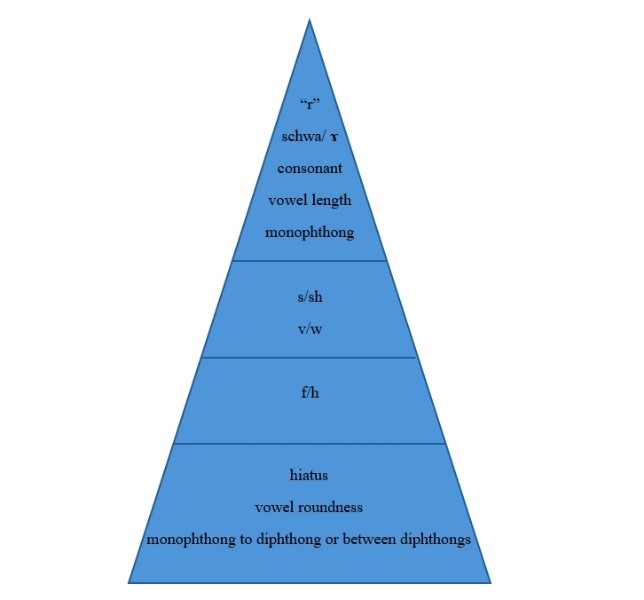
This study, integrating psycholinguistic and sociolinguistic perspectives, investigates bilingual puns with phonetic approximations between two languages, Chinese and English, as a medium for humour and identity expression, and how phonetic approximations involving consonantal shifts (e.g., s/sh and f/h), vowel transformations, rhoticity, and additional schwa influence participants’ perception of bilingual pun stickers. A quantitative approach was used, involving two experiments: a speech production and perception task, and a response-time experiment. These assessed participants’ responses to phonetic approximations in controlled experiments and real-world pun stickers. The results indicate that phonetic similarity, particularly in consonants, leads to faster recognition times, while more pronounced differences, such as between /f/ and /h/, hinder recognition. Vowel roundness, diphthong shifts, and hiatuses were also found to significantly affect pun comprehension, whereas schwa insertion and rhoticity were less influential. The findings highlight the importance of phonetic awareness in bilingual education, with a focus on vowel and consonant accuracy in speech perception and production, and suggest applications of bilingual pun stickers in second language teaching, while acknowledging limitations such as sample size and the absence of multimodal analysis.