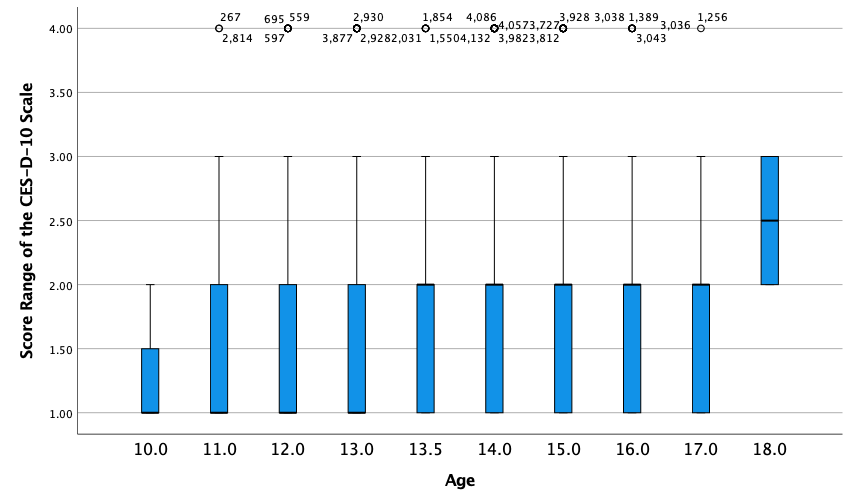
Depression has become a common mental disorder worldwide, and the incidence group is getting younger. In the Chinese context, data collected from surveys and news both indicate that parental maltreatment is one of the significant contributors to the increase in youth depression. This study focuses on studying the correlation between three types of parental maltreatment, which are parental absence, domestic violence, and verbal aggression, and the depressive symptoms severity measured by the CES-D-10 scale and a survey among Chinese adolescents aged between 10 and 18. It is hypothesized that the more parental maltreatment the participants experienced, the more severe depressive symptoms they displayed. Principal components that were extracted for each independent variable from the items in the survey were used in the Pearson correlational analysis and multiple regression analysis. The results suggest that parental maltreatments, including parental absence, domestic violence, and verbal aggression are scientifically significantly correlated with the CES-D-10 test scores of the participants. The more intimate the parent-child relationships are, the lower the CES-D-10 scores. The results of the multiple regression analysis indicate that the overall model is statistically significant, meaning that the set of independent variables significantly predicts the severity of depressive symptoms. This study contributes and provides data support on the topics of parental factors contributing to the increase in Chinese adolescents’ depression. Despite those contributions, it is essential to highlight the limitations, such as the influence of temporary factors on CES-D-10 scores and the potential lack of generalizability across different cultural contexts. Future research could focus on explaining individual differences in depressive symptoms using different measurement tools.